A quiet Sunday on Oahu
Just before 8:00 in the morning on December 7, 1941, the U.S. Pacific Fleet sat at anchor in Pearl Harbor on the island of Oahu. Most of the crews were still waking up, raising flags, or heading to breakfast. Battleship Row, the line of moorings along Ford Island, held the pride of the fleet, including the USS Arizona, USS Oklahoma, USS West Virginia, and USS California.
Roughly 230 miles to the north, six Japanese aircraft carriers had launched the first of two attack waves before dawn. More than 350 aircraft were already in the air and closing on the harbor. The United States was not at war, and almost no one on the island expected what was coming.
The first wave
Army radar operators at Opana Point picked up the incoming formation a little after 7:00 a.m., but the blips were mistaken for a flight of American bombers due in from the mainland. The warning went nowhere. At 7:48 a.m., the first bombs and torpedoes struck.
Torpedo bombers came in low over the water toward Battleship Row while dive bombers and fighters hit the airfields at Hickam, Wheeler, and Ford Island to keep American planes on the ground. Within minutes the harbor was a wall of smoke, flame, and noise. The USS Oklahoma took several torpedoes and rolled completely over. Across the harbor, ship after ship was hit before crews could even reach their battle stations.
The loss of the Arizona
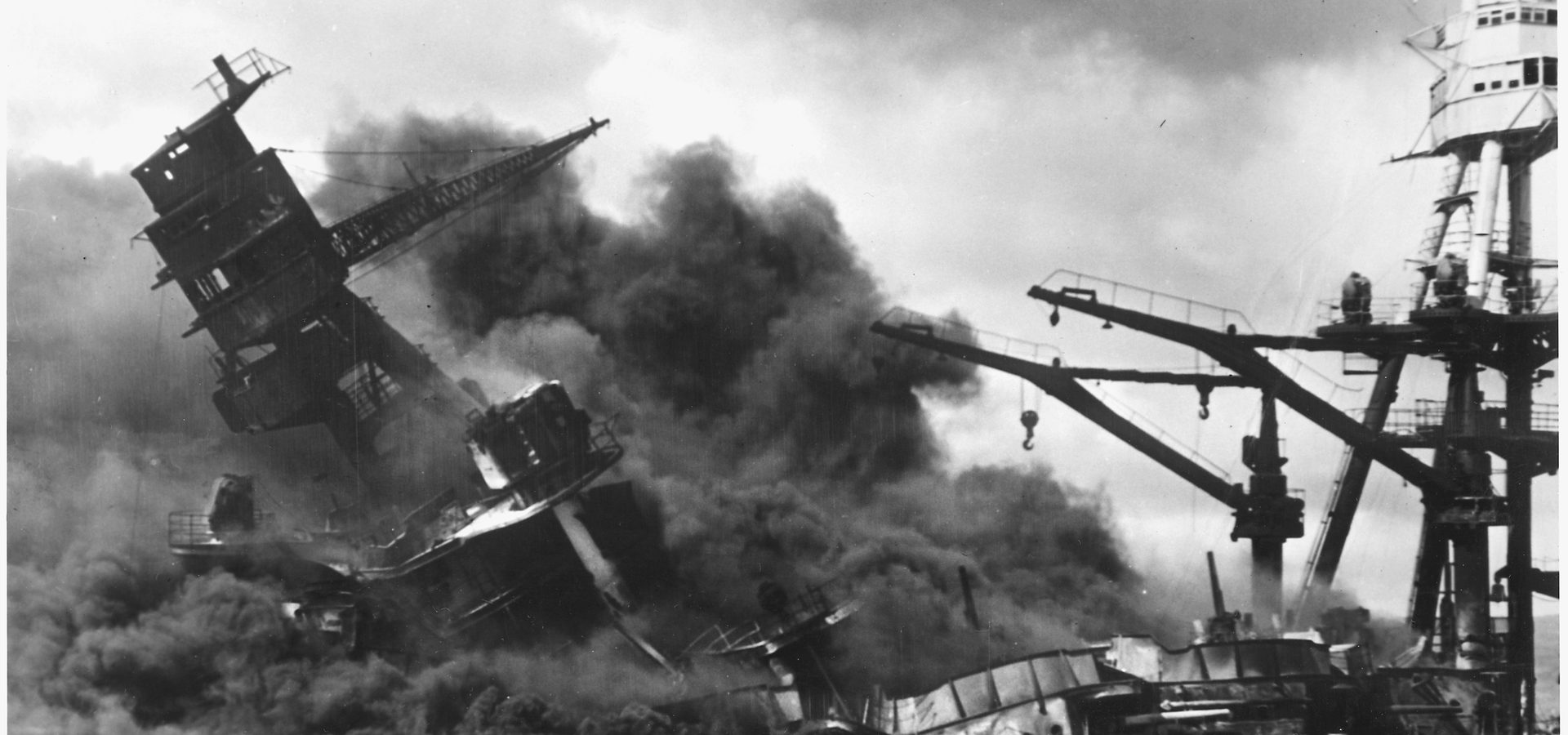
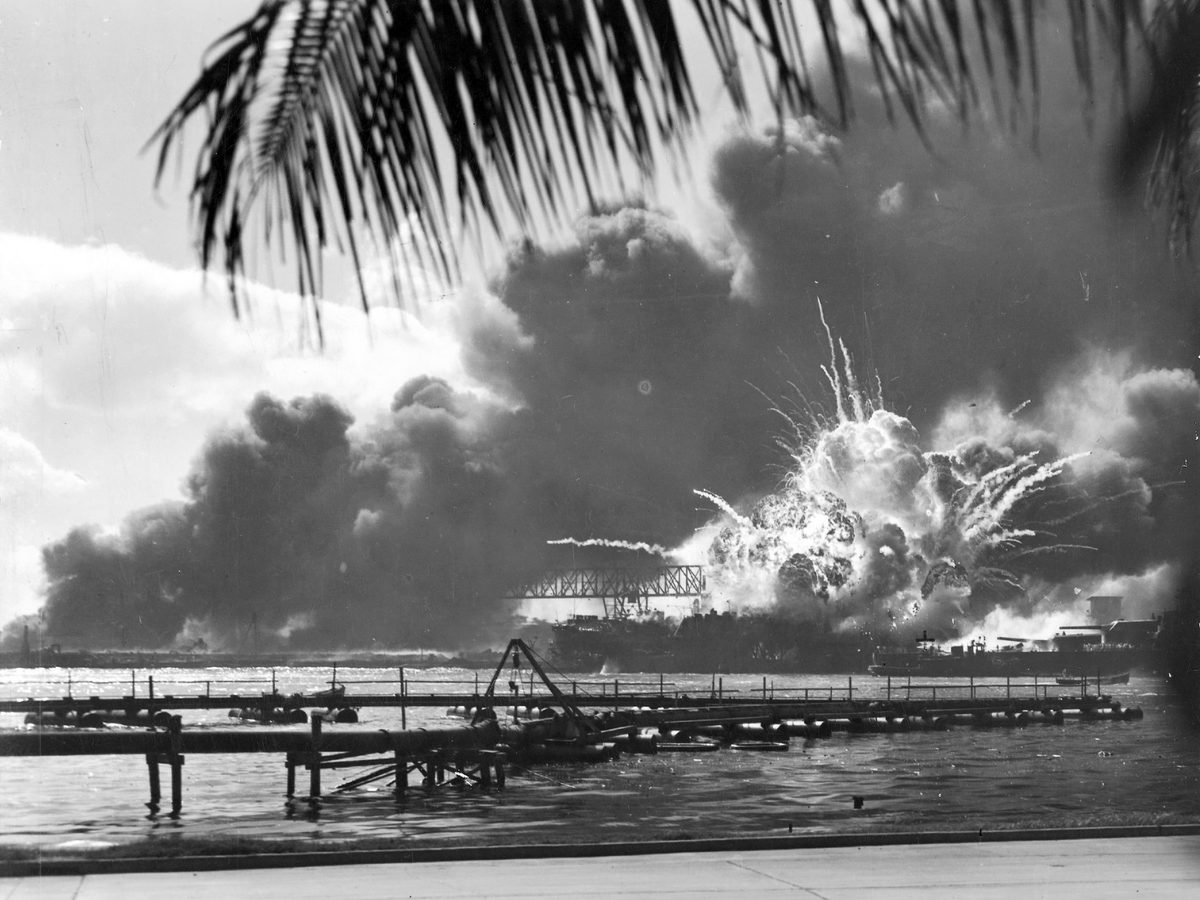
At about 8:06 a.m., an armor-piercing bomb pierced the deck of the USS Arizona and set off her forward ammunition magazine. The explosion tore the battleship apart and sank her in minutes. Of the 1,177 crew members killed aboard the Arizona, more than 900 were never recovered and remain within the ship today. It was the single greatest loss of life in the attack.
A second wave arrived just before 9:00 a.m., targeting ships that were still afloat and the harbor’s repair facilities. By around 10:00 a.m., it was over.
The cost of the morning
The attack killed 2,403 Americans and wounded another 1,178. Nineteen U.S. Navy ships were sunk or damaged, and roughly 188 aircraft were destroyed on the ground. The Japanese lost 29 aircraft and a handful of midget submarines.
Yet the raid missed targets that would prove decisive. The fleet’s aircraft carriers were at sea and untouched. The fuel storage tanks, submarine base, and repair yards survived largely intact, and they allowed Pearl Harbor to recover far faster than Japan had hoped. Most of the sunken battleships were later raised, repaired, and returned to the war.
A date which will live in infamy
The next day, President Franklin D. Roosevelt addressed Congress and called December 7 “a date which will live in infamy.” Within an hour, the United States had declared war on Japan and entered World War II. A country that had stayed out of the global conflict was now fully in it.
You can stand at the place where it began. The USS Arizona Memorial rests directly above the sunken battleship, and the Pearl Harbor National Memorial preserves the story for the millions of visitors who come to Oahu each year.
Common questions
What time did the attack on Pearl Harbor start?
The first bombs fell at 7:48 a.m. Hawaii time on December 7, 1941. The attack came in two waves and was largely over by about 10:00 a.m.
How many people died at Pearl Harbor?
2,403 Americans were killed and 1,178 were wounded. Nearly half of the deaths came from the USS Arizona alone.
Why was the attack on Pearl Harbor important?
It brought the United States into World War II. The day after the attack, the U.S. declared war on Japan, which led to its entry into the wider global conflict.